
How much power is used
We estimate daily consumption from known appliances, equipment, occupancy and available bills or measurements.
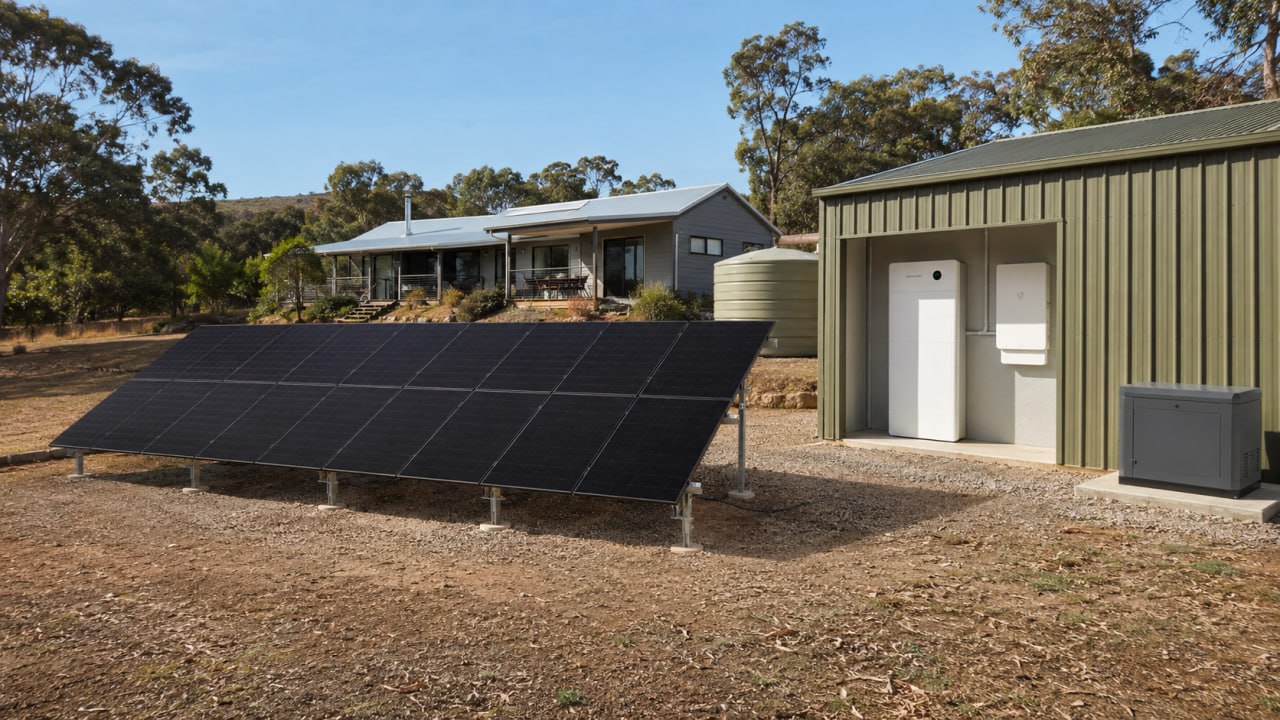
Reliable power designed around life beyond the grid.
Adelaide SolarSafe designs and installs complete off-grid energy systems around the property, the way power is used and the conditions the system needs to handle throughout the year.
We consider solar generation, battery storage, inverter capacity, generator support, monitoring and future loads as one coordinated system—not a collection of separate products.
You don’t need to know the system size or equipment required. Tell us about the property and what needs reliable power, and we’ll guide you through the next steps.
Without the grid to fall back on, system design needs to reflect real daily use, short high-power loads, seasonal solar conditions and what matters most when energy is limited. We build the recommendation around those requirements before selecting equipment.
We estimate daily consumption from known appliances, equipment, occupancy and available bills or measurements.
Pumps, heating, cooling, cooking, workshop equipment and other high-demand loads can determine the inverter and generator capacity required.
Winter solar, summer cooling, changing occupancy and seasonal business or farm loads all need to be considered.
We discuss the desired battery reserve, critical loads and how the system should respond across poor-weather periods.
A generator can provide resilience during prolonged low-solar periods, unusually high demand or planned maintenance. Its capacity and control strategy must suit the complete system.
Additional buildings, pumps, appliances, electric vehicles or changing occupancy should be considered so the initial design leaves sensible room for growth.
Plans, photos and load lists are useful, but they rarely show the whole job. Adelaide SolarSafe is happy to attend suitable sites to understand the property, installation areas, access and the way energy will actually be used.
That visit helps us identify practical requirements early and design the electrical system around the site rather than forcing the site to fit a standard package.
A reliable off-grid system balances energy production, storage and demand. Each part needs to be sized and configured around the same operating plan.
Solar generation and, where required, generator support feed the inverter and energy-management system. Battery storage exchanges energy with that central system, which supplies the property’s loads while monitoring reports system status.
Produce energy for the property and recharge the battery bank. Array size and orientation should reflect seasonal conditions as well as annual totals.
Store energy for evenings, overnight use and periods when solar generation is lower. Usable capacity and reserve settings are designed around the required operating strategy.
Supply the property’s electrical loads, coordinate charging sources and manage system limits. Continuous and short-duration power requirements both matter.
Provide additional energy when solar and stored energy are not enough. Where suitable, generator start and charging can be integrated into the system controls.
Show energy production, battery state, consumption and system alerts so the owner can understand how the off-grid system is operating.
Off-grid reliability is not created by battery capacity alone. The design needs a clear strategy for poor weather, unusual demand, equipment limits and future changes at the property.
We identify which loads must remain available and which can be managed when stored energy is limited.
The proposed usable battery capacity and reserve settings should reflect the property’s priorities and the agreed generator strategy.
The generator must be compatible with the proposed inverter system and capable of supporting the intended loads and battery-charging strategy.
Where supported by the selected equipment and generator, automatic start and stop control can help maintain energy availability without relying on manual intervention.
Clear monitoring helps the owner respond to changing loads, low battery conditions, generator operation and system alerts.
Equipment placement, component access and future capacity should be considered so the system remains practical to support over time.
The proposal should explain the intended operating strategy, battery reserve, generator role, important system limits and the assumptions used in the design. Actual autonomy and generator use will vary with weather and energy consumption.
Tell us how the property will be used, what equipment needs power, whether a generator already exists and what may change in the future.
We assess the proposed equipment locations, solar area, access, cable routes, existing infrastructure and practical installation requirements.
We design the solar, battery, inverter, generator and energy-management strategy around the agreed loads, conditions and reliability goals.
The proposal outlines equipment, capacity, intended operation, generator strategy, scope, costs, exclusions and important design assumptions.
Our own installation team completes the work, commissions the system, configures monitoring and tests the agreed operating functions.
We explain the monitoring, normal operation, generator interaction and important system limits, and remain your point of contact after installation.
You don’t need to calculate the system size yourself. Start with the property, the loads and the level of reliability you need, and we’ll guide you through the assessment.
That depends on daily energy use, peak loads, seasonal conditions, the desired reserve and the planned generator strategy. We size storage after understanding what the property needs to run.
A generator is often a valuable part of an off-grid reliability strategy, particularly during prolonged poor weather or unusual demand. Whether one is required and how it should operate depends on the property and the agreed design goals.
Potentially. Automatic start and stop can be included where the selected inverter controls and generator are compatible. The proposal will explain how generator operation is intended to work.
Possibly. We need to assess its electrical output, capacity, condition, controls and compatibility with the proposed system before relying on it in the design.
There is no single answer because autonomy changes with the weather, battery state and the loads being used. We’ll explain the design assumptions, intended reserve and generator strategy rather than promising a fixed number of days.
Often, but expansion is easiest when it is considered in the original design. Tell us about future buildings, appliances, pumps, vehicles or occupancy changes so sensible allowances can be discussed.
A property location, description of how it will be used, appliance or equipment list, any existing generator or solar details and available plans are useful. You don’t need every answer before making an enquiry.
Yes. Adelaide SolarSafe is happy to attend suitable sites when an on-site assessment is the right next step. We’ll confirm availability, travel requirements and any assessment cost before booking.
Still have an off-grid question?
Tell us where the property is, what needs power and what you want the system to achieve. We’ll guide you through the initial information and arrange a site assessment where appropriate.
A load list, property plan, generator details or photos can help, but they’re optional when you first enquire. If you want to share them, email them to admin@adelaidesolarsafe.com.au.
We’re based in Adelaide and take on off-grid projects in regional South Australia by arrangement—see our service areas.